Body and mind out of balance – symptoms and recovery

Body and mind out of balance – symptoms and how to restore the balance
Constantly tired, irritable, sleeping badly, vague complaints without a clear cause? Often body and mind are out of balance. We explain how to recognise it and what you can do about it.
Body and mind work together constantly – physical wellbeing affects your mental state, and vice versa. When that connection falters, you feel it in both body and head. In this article: how to recognise an imbalance, what causes it, and which six pillars help you get recovery going again – including the tools we see working every day at Flamengo for people who want to find their balance again.
What does it mean when body and mind are out of balance?
Body and mind out of balance means that the interplay between physical and mental wellbeing is disrupted. The nervous system stays in 'standby mode' for too long – alert, tense, ready to react – without getting the rest it needs to recover. That has consequences at every level: you sleep worse, feel more tired, get irritated more quickly and suffer physical complaints more often.
What makes humans special is that body and mind are not separate. A stressful thought immediately raises your heart rate. A tense muscle in your neck causes a headache that colours your mood. Poor sleep changes how you see the world. As soon as one side gets out of balance, the other follows – usually without you noticing straight away.
Symptoms: how do you recognise that body and mind are out of balance?
The signals are often subtle and creep in slowly. Below are the ten most common symptoms, divided into physical and mental signals. If you recognise several of them, that is a good moment to change something.

The ten most common signs that body and mind are no longer in harmony
What stands out about these symptoms
Many people see physical and mental complaints as separate problems. Headache? A painkiller. Sleeping badly? A sleeping pill. Tired? More coffee. But these symptoms often point to one underlying problem: a body-mind connection that has lost its balance. Only when you tackle the cause – not the individual symptoms – does the system recover as a whole.
Causes: why do body and mind get out of balance?
Imbalance rarely has a single cause. It is usually an accumulation of factors that reinforce each other.
Chronic stress
By far the most common cause. Under stress your body produces cortisol – a hormone meant to help you briefly when facing a threat. But when stress becomes chronic, cortisol stays elevated. That affects sleep, the immune system, digestion and mood. Work pressure, worries, deadlines and high expectations are modern sources of stress that rarely disappear completely.
Lack of sleep or poor sleep quality
Sleep is when both body and mind recover. Too little sleep (less than 7 hours a night) or poor sleep quality disrupts hormone balance, slows recovery and makes the brain less resilient. A vicious circle: too little sleep causes stress, and stress causes worse sleep.
Too little exercise
Exercise is a natural antidepressant. It releases endorphins, lowers cortisol and improves sleep. People who move little miss out on these regulating mechanisms. Desk jobs, little time for sport and long hours in front of a screen make this worse.
Nutrition and hydration
What you eat directly affects your mood. Too few B vitamins, omega-3 or magnesium can increase irritability, fatigue and loss of concentration. Too much sugar and processed food causes energy dips and mood swings. Too little water literally makes the brain slower.
Emotional events and trauma
Loss, relationship problems, traumatic experiences or long-term unprocessed emotions are stored in both body and mind. Often without you consciously noticing – until they show up as physical complaints or an unexplained low mood.
Too few moments of recovery
Many people live 'switched on'. Work, children, social obligations, phone. Without conscious moments of rest the nervous system gets no chance to recover. The body never really enters the parasympathetic state – the 'rest-and-recover mode' that is essential for balance.
The 6 pillars for balance between body and mind
Restoring balance does not come from one golden tip, but from a combination of building blocks. Below are the six pillars that, according to research have the most effect.

Six practical pillars to restore the balance between body and mind
Aim for 7 to 9 hours of quality sleep a night. During sleep the body recovers, the brain processes emotions and consolidates memory. Keep a regular sleep rhythm, avoid screens for 60 minutes before bed, and keep the bedroom dark, cool and quiet.
Exercise may well be the most powerful tool for balance between body and mind. Half an hour of moderate exercise a day – walking, cycling, swimming, yoga – releases endorphins, lowers cortisol and improves your sleep. It doesn't have to be intense sport; consistency counts for more than intensity.
What you eat partly determines how you feel. Omega-3 fatty acids (oily fish, walnuts, linseed) support brain function. B vitamins help with energy and mood. Magnesium calms the nervous system and improves sleep. Eat colourful, varied and as unprocessed as possible – and drink at least 1.5 litres of water a day.
This may be the most underrated pillar – and the one where at Flamengo we see the biggest impact every day in people who are out of balance. Conscious exposure to heat and cold is not a luxury; it is a direct hack of your nervous system.
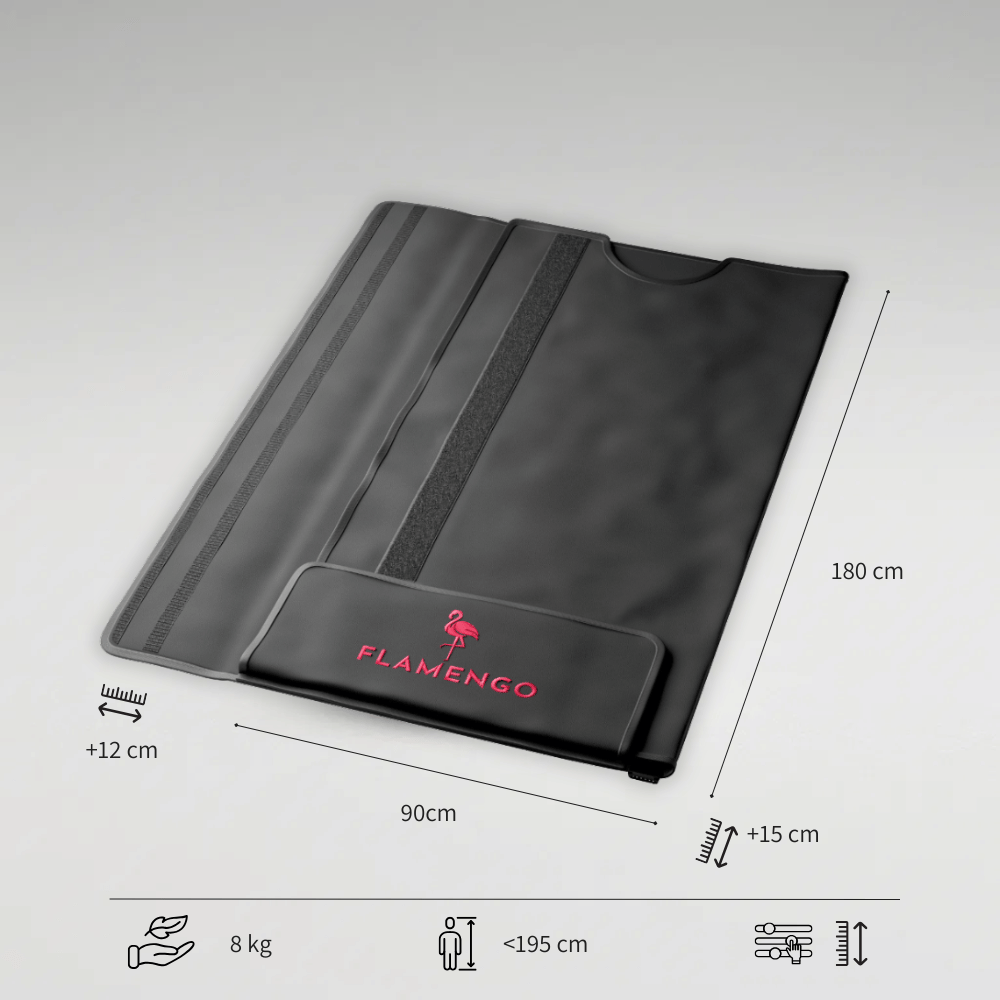
Heat – for example via an infrared sauna blanket – activates the parasympathetic nervous system, the 'rest-and-recover mode'. Cortisol drops measurably within a single session, sleep improves, and muscle tension eases. Cold – an ice bath or cold shower – trains mental resilience and gives a natural endorphin boost that lasts for hours. Regularly seeking out the contrast between hot and cold trains the nervous system to return to calm more quickly after stress.

The three Flamengo tools for people who want to find their balance again
Conscious breathing brings immediate calm to the nervous system. Two minutes of slow breathing – 4 seconds in, 6 seconds out – can already noticeably lower your heart rate. Meditation and mindfulness work more deeply: they help you observe your thoughts without being swept along by them. Start small: 5 minutes a day is enough to notice an effect.
Humans are social beings. Good contact with family and friends is a proven factor for mental health and even for a longer life expectancy. Just as important: time for yourself. Journaling, therapy or simply being quiet helps you sort out what is going on inside you. Without reflection, unprocessed emotions keep piling up.
The Flamengo approach – how we look at recovery
At Flamengo we see people every day who are out of balance – athletes who no longer recover, busy professionals with chronic stress, people with rheumatism or fibromyalgia, parents who forget about themselves. What do all these people have in common? They are looking for a way to reconnect with their body at home, at their own pace.
Our approach is not complicated: we believe in daily rituals that work without you having to invest much time or effort. An infrared sauna blanket for 30 minutes on the sofa while you read a book. Two minutes in an ice bath before breakfast. Twenty minutes of recovery boots after a long working day. No wellness centre membership, no travel time, no forced moments of rest in your busy diary.
What we see time and again: as soon as people apply one of these rituals consistently, the other pillars follow naturally. Better sleep gives more energy for exercise. Mental calm leads to better food choices. The nervous system settles and you start hearing your body's signals again. That is balance between body and mind in practice.
Body and mind back in balance – what will you do today?
With chronic imbalance, patience is needed – recovery takes weeks to months. But you can start today with small, concrete steps.
Today
Do 5 minutes of breathing exercises straight after getting up (4 seconds in, 6 seconds out). Walk outside for at least 20 minutes. Put screens away 60 minutes before bedtime. Drink two extra glasses of water.
This week
Build a regular sleep routine: same time to bed, same time to wake up. Schedule three moments of exercise. Keep one evening truly free – no obligations, no screen, just something that gives you peace.
This month
Introduce at least one 'reset' ritual into your routine: a Flamengo sauna blanket, an ice bath, a cold shower or a meditation app. Two to three sessions a week. Keep track of how you feel – often you only see the effect in hindsight. Our customers often notice a clear difference after 3 to 4 weeks: better sleep, less tension, a clearer head.
When should you seek professional help?
- Complaints that last longer than 4 to 6 weeks despite lifestyle changes
- Low mood that doesn't lift and affects your daily functioning
- Anxiety or panic symptoms that restrict what you want to do
- Sleep problems that persist despite good sleep hygiene
- Physical complaints without a clear cause for which your doctor can find no explanation
- Thoughts of self-harm or seeing no way out
A timely conversation with a professional can prevent a temporary imbalance from developing into burnout or a chronic complaint. If in doubt, ask your GP for a referral.
Frequently asked questions about balance between body and mind
The most common signs are chronic fatigue, headaches and muscle tension, sleep problems, stomach and bowel complaints, loss of concentration, irritability, overthinking and mood swings. When several of these symptoms occur at the same time, it usually points to a disrupted balance between physical and mental wellbeing.
By working on six pillars at the same time: enough sleep, daily exercise, brain-friendly nutrition, conscious moments of heat or cold, breathing or mindfulness, and social connection. Not a single solution but the combination gives the strongest effect. Start small and build up gradually.
Stress activates the production of cortisol, the stress hormone. With short-term stress that is useful, but with chronic stress cortisol stays elevated. That affects sleep, digestion, the immune system and mood. In the long term it increases the risk of burnout, cardiovascular disease, anxiety and depression.
With a daily approach you often feel the first improvement after 2 to 4 weeks: better sleep, more energy, less irritability. For a lasting restoration of balance between body and mind, allow 2 to 6 months, depending on how long the imbalance has lasted. Consistency is more important than intensity.
Yes, regular sauna use – especially an infrared sauna blanket like Flamengo's – lowers cortisol, activates the parasympathetic nervous system and improves sleep. Two to three sessions a week of 20 to 30 minutes have a noticeable effect on stress levels and mental calm within a few weeks.
Body and mind constantly influence each other. Thoughts and emotions have direct physical effects: stress raises the heart rate, anxiety tenses the muscles, joy releases endorphins. Conversely, your physical state affects your mental state: tiredness makes you irritable, exercise makes you cheerful. They cannot be seen separately.
Burnout is characterised by prolonged exhaustion (longer than 6 months), the feeling of not being able to cope with anything, cynicism or detachment towards work, and concentration problems. It is more than tiredness – you feel empty and no amount of rest brings recovery. If you suspect burnout: see your GP.
Start small: 5 minutes of breathing exercise after getting up, at least 20 minutes walking outside, screens away 60 minutes before bedtime, two extra glasses of water. These small changes have a noticeable effect on your energy and sleep within a week. The rest follows naturally once this foundation is in place.
Conclusion
Body and mind are inextricably linked. When they get out of balance, you feel it on every level – physically and mentally. The good news: bringing body and mind back into balance is always possible, and it doesn't have to be big or complicated. Start with one pillar and build up gradually. We believe that the combination of sleep, exercise, nutrition and conscious moments of heat and cold lays the strongest foundation – and that you can do all of it at home, at your own pace. The Flamengo wellness tools are designed to make exactly that possible: daily rituals that work, without the hassle.