

Promote muscle recovery with infrared sauna

Boost muscle recovery — 7 proven ways to recover faster after exercise
Muscles don't grow during exercise, but during the recovery afterwards. The faster you recover, the more often you can train effectively. We set out the seven most effective ways for you.
Boosting muscle recovery isn't a luxury — it determines whether you make progress, stay injury-free and keep enjoying training. In this article: how muscle recovery works at cellular level, the seven proven ways to speed it up, and which tools we at Flamengo see working every day for athletes who take recovery seriously.
How does muscle recovery work?
What many athletes don't realise: muscles don't get stronger during training, but during the recovery afterwards. Intensive exertion causes microscopic tears in your muscle fibres — a normal and even desirable response to load. Your body then starts a process called supercompensation: it repairs the damage and builds slightly more muscle tissue than before. That's how you gradually get stronger.
This process runs in three distinct phases, each with its own timeline.

Muscle recovery runs in three phases — the whole cycle takes 48 to 96 hours
Phase 1 — Micro-tears (0 to 24 hours)
An inflammatory response starts right after training. You often feel muscle stiffness and the familiar delayed onset muscle soreness (DOMS), which peaks 24 to 48 hours after training. Lactic acid and waste products need to be cleared.
Phase 2 — Repair phase (24 to 72 hours)
Proteins and oxygen are carried to the damaged muscles via the bloodstream. Satellite cells — a type of stem cell — activate to build new muscle fibres. This is the phase in which you can do most to speed up recovery.
Phase 3 — Supercompensation (48 to 96 hours)
The muscle doesn't just recover — it becomes stronger than before. Train now and you build further on that new base. Train too early (before phase 2 is complete) and you undermine recovery and your progress stalls.
Boost muscle recovery — 7 proven ways
You don't speed up muscle recovery with one golden tip. It's a scientifically supported approach, extensively studied in the sports science literature — a combination of building blocks. Below are the seven most effective ways based on sports science research.

Seven proven ways to boost muscle recovery after exercise
Proteins are the building blocks of muscle recovery. Aim for 1.6 to 2 grams of protein per kilogram of body weight per day, and get 20–40 grams of protein within 2 hours of training. Combine with carbohydrates to replenish your glycogen stores. Good sources: quark, eggs, chicken, fish, pulses and whey protein.
During deep sleep, production of growth hormone peaks — the hormone that drives muscle recovery and growth. Athletes who sleep less than 6 hours demonstrably recover more slowly and are more prone to injury. Sleep isn't a luxury; it's the most underrated recovery tool.
In an hour of exercise you lose 0.5 to 1.5 litres of fluid. Drinking too little thickens the blood, slows the removal of waste products and worsens muscle soreness. Drink 2 to 3 litres of water a day, more with intensive exercise. Magnesium and electrolytes provide extra help with hydration.
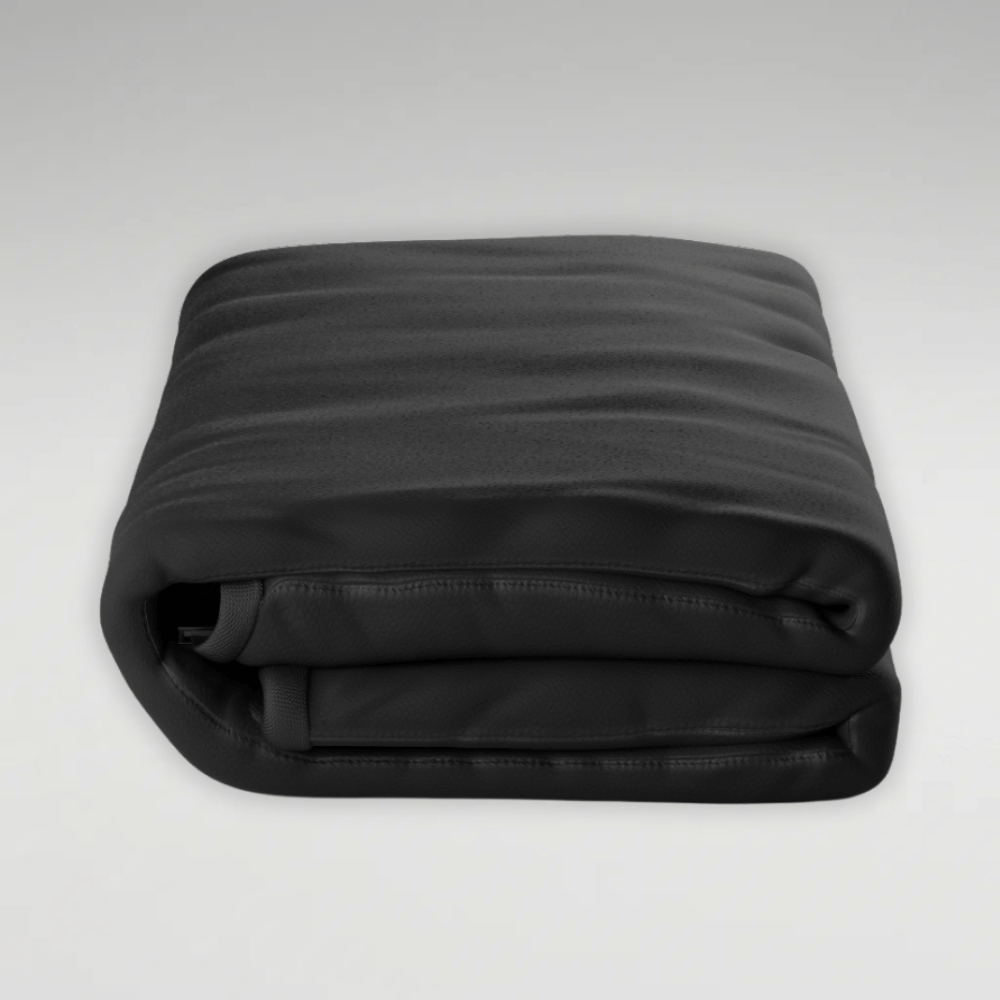
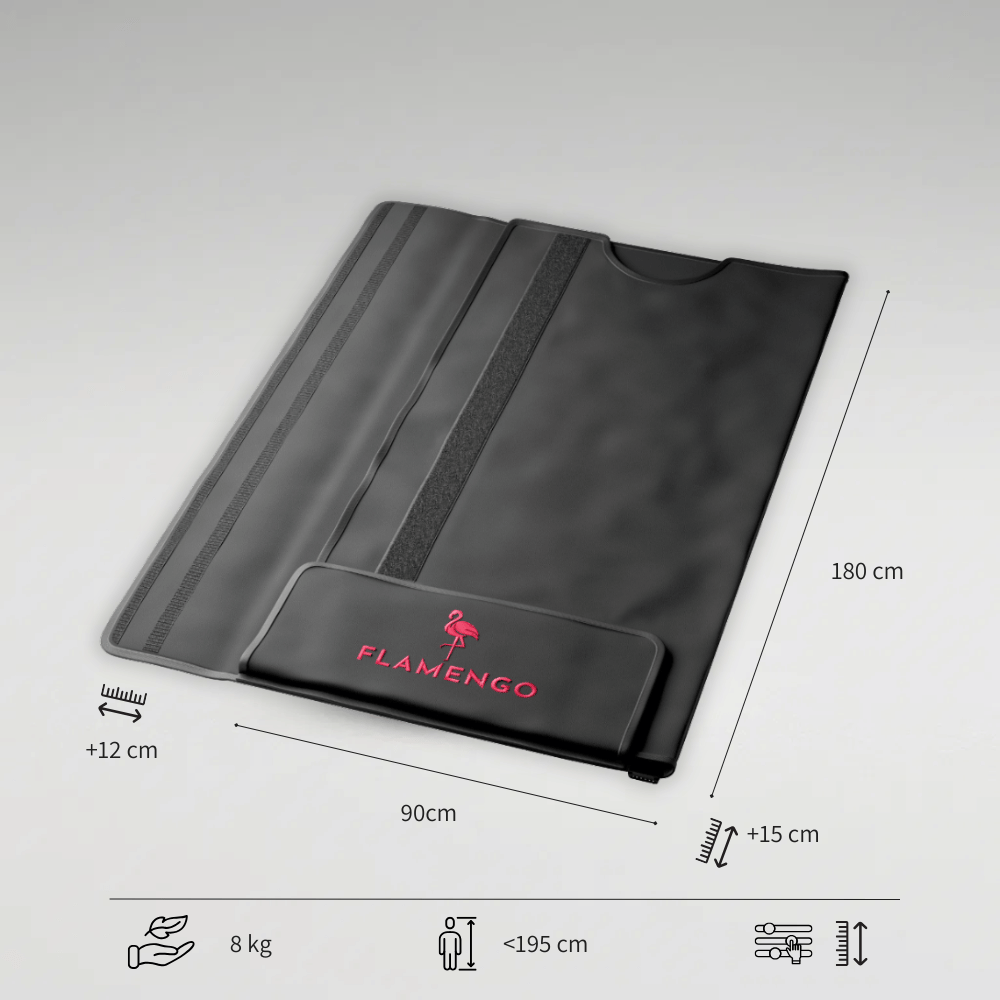
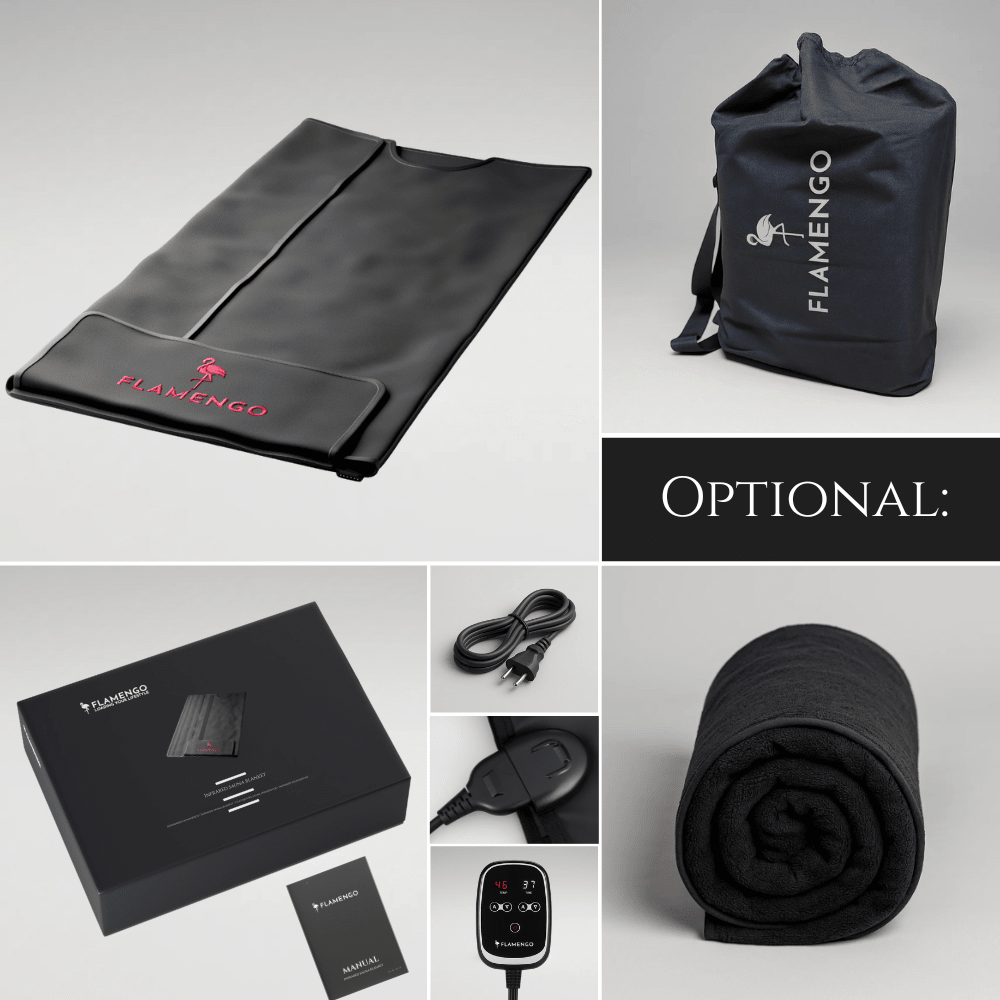
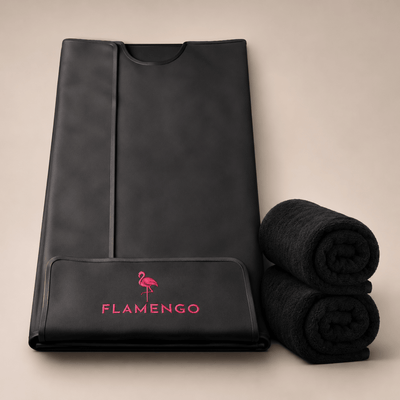
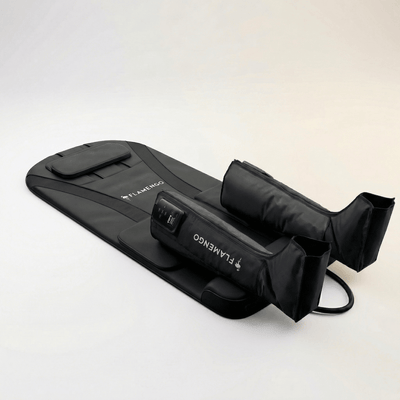
This is what Flamengo is all about every day. Infrared heat penetrates into the muscles and the connective tissue beneath. There it widens blood vessels, stimulates circulation and speeds up the removal of lactic acid and waste products. At the same time it gives a deep relaxation you can't achieve with a shower or a heated blanket.
A 20 to 30-minute session straight after training in an infrared sauna blanket visibly speeds up the first recovery phase. Many athletes notice they have less delayed onset muscle soreness the next day.
For athletes who run, cycle or do a lot of leg training, recovery boots are one of the most powerful tools. They are inflatable compression boots that pump blood back towards the heart in waves. This actively flushes waste products from the muscles, reduces swelling and considerably lowers muscle soreness.
Many top athletes use recovery boots after hard training sessions or competitions. But recreational runners and people who stand a lot also experience a big difference.
Sitting completely still on a rest day is a common mistake. Light movement — a gentle walk, a bike ride or gentle yoga — keeps circulation going and helps actively clear waste products. Foam rolling is a variant you can target at specific muscle groups.
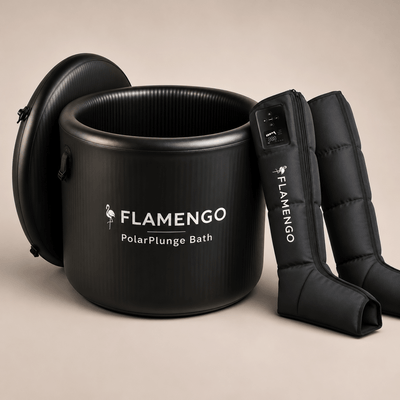
Cold works differently from heat, but is just as effective. An ice bath or cold shower after heavy strength training constricts blood vessels, reduces acute inflammation and swelling, and gives an endorphin boost. Especially useful when you need to perform again the next day.
Sauna before or after exercise?
A common question: when is a sauna most effective — before or after training? The short answer: after.
Sauna after exercise
This is where the biggest effect lies. The heat stimulates circulation exactly when your muscles need recovery, speeds up the clearance of lactic acid, relaxes tense muscles and reduces delayed onset muscle soreness. 20 to 30 minutes of infrared after training, with enough hydration before and after, is a ritual many athletes no longer want to miss.
Sauna before exercise — only briefly
A sauna right before training is usually not advisable — you become tired and dehydrated before you start. A short 5 to 10-minute warm-up can help loosen stiff muscles, but save full sauna sessions for after training.
The Flamengo recovery toolkit
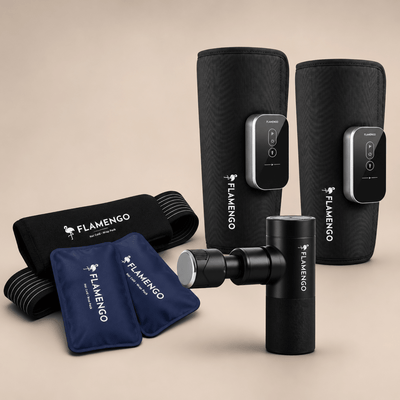
At Flamengo we see athletes every day who want to take their training results to the next level. Our recovery toolkit consists of three tools, each addressing a different aspect of recovery: the whole body (sauna blanket), the legs (recovery boots) and specific joints (InfraPulse). Powerful on their own, even more effective combined.

Three Flamengo tools for athletes who are serious about recovery
How do you best use them together?
For many of our customers, the ideal recovery routine after a hard workout looks like this:
| Timing | Tool | What it does |
|---|---|---|
| Straight after training | Protein + water | Supplies building blocks, replenishes fluid |
| 30 min after training | InfraPulse on sensitive joints | Relaxes knee, shoulder or elbow with heat + vibration |
| 1 hour after training | Sauna blanket (20–30 min) | Deep circulation, clears lactic acid |
| Before bed | Recovery boots (20–30 min) | Relieves the legs, removes waste products |
That sounds like a lot — but it's a combination of relaxed sessions in which you simply sit on the sofa. Total active effort: zero. Effect on recovery: big.
Stiff muscles — how do you deal with them?
Stiff muscles after exercise are annoying, but usually easy to remedy. The cause is usually delayed onset muscle soreness (DOMS) from micro-tears, or simply muscle tension after heavy load.
Immediate relief
Heat works fastest. An infrared sauna blanket, warm bath or warm shower relaxes the muscles within 15 to 20 minutes. Light movement after the heat speeds up the effect.
The next day
Don't sit still — move lightly, drink plenty of water, eat protein-rich food. A second infrared session makes a difference. For stiff joints (knee, shoulder, elbow), an InfraPulse vibration massage tackles the problem in a targeted way.
When is it a concern?
If the stiffness lasts longer than a week, or unexplained swelling appears, it's wise to see your GP or a physiotherapist.
When should you be careful with recovery tools?
- An acute muscle tear or suspected injury
- Swelling, fever or warmth at one specific spot
- Thrombosis risk or a recent history of thrombosis
- Heart problems or untreated high blood pressure (before using an infrared sauna or ice bath)
- Pregnancy (especially discuss heat and cold)
- Diabetes with reduced sensation in the feet or legs
Frequently asked questions about muscle recovery
The seven most effective ways are: enough protein (1.6–2 g per kg of body weight), 7–9 hours of sleep, good hydration, infrared heat, compression with recovery boots, light active movement on rest days, and cold therapy after hard training. The combination gives the best result.
Protein-rich food (quark, eggs, fish, chicken, pulses), enough water, magnesium and omega-3 fatty acids. Plus sleep, light movement and recovery tools such as infrared heat, recovery boots or a massage gun. Avoid alcohol and smoking — they measurably slow recovery.
On average 24 to 72 hours, depending on intensity and muscle group. Strength training often requires 48–72 hours, endurance training 24–48 hours. Large muscle groups (legs, back) recover more slowly than small ones. The full cycle including supercompensation is usually 48 to 96 hours.
Yes, infrared heat penetrates into the muscles, widens blood vessels and speeds up the removal of lactic acid and waste products. Athletes who regularly use an infrared sauna blanket or cabin experience less delayed onset muscle soreness and faster recovery. 20–30 minutes after training is ideal.
Both work, but differently. Heat improves circulation and relaxes muscles — good for long-term recovery. Cold reduces acute inflammation and swelling — good right after hard training. The most powerful approach is contrast therapy: alternating heat and cold.
Eat 20–40 grams of protein within 2 hours, drink plenty of water, sleep at least 7 hours. For a real boost: infrared heat (20–30 min on a sauna blanket) and recovery boots for the legs. After very hard sessions, add a short cold shower or ice bath for extra anti-inflammatory effect.
Yes, magnesium plays a role in muscle relaxation, prevents cramps and supports energy production in muscle cells. Athletes have an increased need, especially with strength training. 300–400 mg a day through food (nuts, leafy greens, dark chocolate) or a supplement, preferably in the evening.
With mild soreness, light movement can actually help — walking, low-intensity cycling, or training a different muscle group. With severe soreness or pain that affects your movement, rest is better. Listen to your body: pain is a signal, not a competition.
Conclusion
Boosting muscle recovery is no secret. Protein, water, sleep and deliberate recovery tools together make the difference between stagnation and progress. At Flamengo we believe athletes who take their recovery as seriously as their training make the biggest leaps. Our recovery toolkit — sauna blanket, recovery boots and InfraPulse for specific joints — is designed to make that leap possible at home. Start small, stay consistent, and within a few weeks you'll notice the difference.