Contrast therapy — the power of hot and cold for optimal recovery

Contrast therapy — the power of hot and cold for optimal recovery
Elite athletes, biohackers and wellness fans swear by it. Alternating heat and cold is one of the most powerful ways to help your body recover faster, strengthen your immune system and build mental resilience.
Contrast therapy — alternating between heat and cold — may well be the most effective recovery protocol you can do at home. The temperature switch creates a strong vasodilation-vasoconstriction cycle that trains circulation, reduces inflammation and speeds up recovery. In this article: what contrast therapy is exactly, the full protocol, the six scientifically supported benefits and who it works for.
What exactly is contrast therapy?
Contrast therapy, also known as contrast hydrotherapy, is the deliberate alternation between heat and cold to stimulate the body and help it recover. The method is centuries old — think of Finnish sauna traditions where people jump into an ice-cold lake or the snow after a hot sauna, or Roman bathhouses where switching between warm and cold pools was central. In recent years contrast therapy has been gaining popularity rapidly thanks to scientific evidence for its health benefits.
The principle is simple but powerful: heat causes vasodilation (blood vessels widen), cold causes vasoconstriction (blood vessels narrow). The alternation trains your blood vessels, stimulates circulation deep into muscles and tissues and triggers a cascade of physiological processes that speed up your recovery.
The traditional form is a Finnish sauna followed by cold water — but for most people that isn't a daily option. The modern, accessible version: a heat source such as an infrared sauna or sauna blanket, followed by an ice bath or a cold shower. No fixed spot needed, no spa visit, simply at home.
The contrast therapy protocol — step by step
How do you apply contrast therapy correctly? Order, duration and temperature make the difference between an effective session and an uncomfortable experience.

The full contrast therapy protocol: hot → cold → repeat, finishing on cold.
Step 1: Warm up — 30 to 45 minutes
Start with a session in a hot sauna or infrared sauna blanket at 55-65°C for 30 to 45 minutes. Your core temperature rises, blood vessels widen, muscles relax and you start sweating heavily. This is the preparation phase — the body needs to be "warm" before the cold stimulus has maximum effect. Also read our article on muscle recovery with infrared.
Step 2: Cool down — 30 seconds to 2 minutes in cold water
Step straight from the heat into an ice bath of 10-14°C. Start with 30 to 60 seconds if you're new, and gradually build up to 1-2 minutes. Advanced users can go up to a maximum of 2-3 minutes — but for most people 1-2 minutes is plenty to have an effect. No ice bath? A cold shower (1-2 minutes on the coldest setting) also works, but the effect is significantly less powerful. Blood vessels constrict sharply, anti-inflammatory processes kick in and you get a natural endorphin boost.
Step 3: Repeat — 2 to 3 cycles, finish on cold
For maximum effect: repeat the cycle 2 to 3 times. Second heat session: 20-25 minutes. Second cold round: 30-60 seconds (or longer if you're advanced). Third heat round (optional): 15 minutes. Third cold round: 30-60 seconds. Always finish on cold — this gives the best cardiovascular training and long-term benefits.
The six scientifically supported benefits
Why do elite athletes such as Cristiano Ronaldo, biohackers and wellness experts do this? Because the benefits are supported by dozens of studies. Here are the six most important effects.

The six main benefits of contrast therapy — confirmed in peer-reviewed research.
The strongest reason for athletes. Alternating hot and cold gives much better removal of lactic acid and other waste products from muscle tissue. That means less muscle soreness the next day (DOMS) and getting back in shape for the next training session sooner. Research shows athletes who do contrast therapy recover 30-40% faster than athletes who only rest.
Every time blood vessels widen and narrow, they get a training effect — comparable to muscles in the gym. Regular improvement of blood circulation makes your heart more efficient, lowers blood pressure and improves circulation to the extremities.
Cold lowers acute and chronic inflammatory markers in the body. Combining it with heat strengthens this effect. Particularly valuable for joint complaints such as osteoarthritis, rheumatoid arthritis and for chronic pain conditions such as fibromyalgia.
Cold exposure increases the production of white blood cells and activates the immune system. Studies show that people who regularly do cold exposure catch colds less often and recover faster when they fall ill. The Wim Hof Method is largely based on this.
Cold shock gives a huge boost to endorphins, noradrenaline and dopamine — natural mood and focus boosters. It increases mental resilience: anyone who regularly seeks out uncomfortable moments (such as an ice bath) builds psychological toughness. Many people experience an immediate improvement in mood after a session.
The drop in body temperature after the session stimulates melatonin production and promotes deep sleep. Research shows 20-25% more deep sleep phases in people who regularly use contrast therapy. Important condition: do the session at least 2-3 hours before bed for optimal effect.
Who is contrast therapy suitable for?
Contrast therapy works for various groups, each for its own reason.
| Target group | Main benefit | Frequency |
|---|---|---|
| Athletes & fitness | Fast muscle recovery, fewer injuries | 2-4x a week, after training |
| People with chronic pain | Anti-inflammatory, circulation | 2-3x a week, consult your doctor |
| Wellness lovers | Relaxation, mental balance | 1-2x a week, at a quiet moment |
| Stress and sleep problems | Parasympathetic activation, deeper sleep | 2-3x a week, early evening |
| Biohackers | Hormone optimisation, energy | 3-4x a week, fixed protocol |
| Beginners | General health, immune system | Start with 1x a week, build up |
- Heart or vascular disease — consult a doctor first;
- High or very low blood pressure;
- Pregnancy (especially the cold part);
- Recent surgery or trauma;
- Raynaud's syndrome (hypersensitivity to cold);
- Untreated diabetes with reduced heat sensation;
- Acute fever or infection;
- Epilepsy or a history of fainting.
Contrast therapy at home with Flamengo
Contrast therapy used to be accessible only in expensive spas or if you lived in a colder climate. Now anyone can do it at home — simply, comfortably and whenever it suits you.

The Flamengo combination makes contrast therapy possible at home — sauna blanket for the heat, PolarPure for the cold.
The Flamengo sauna blanket for the heat
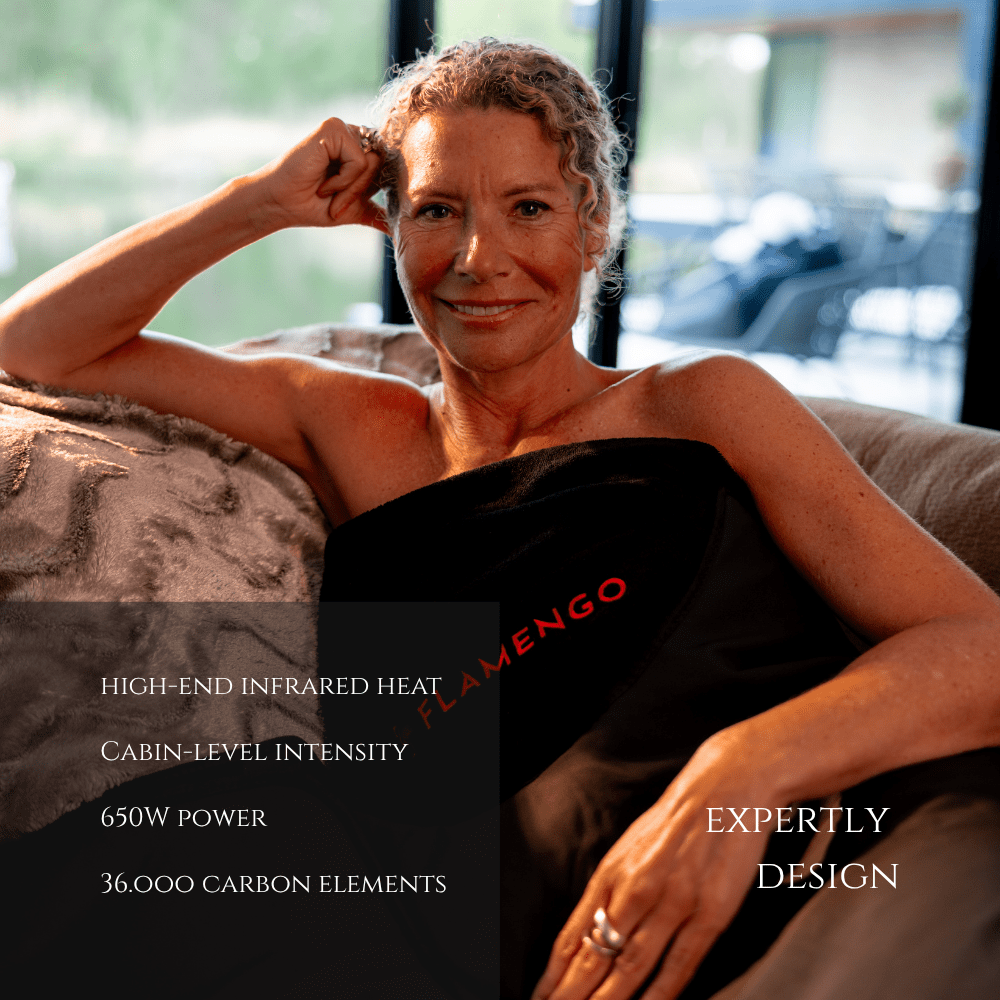
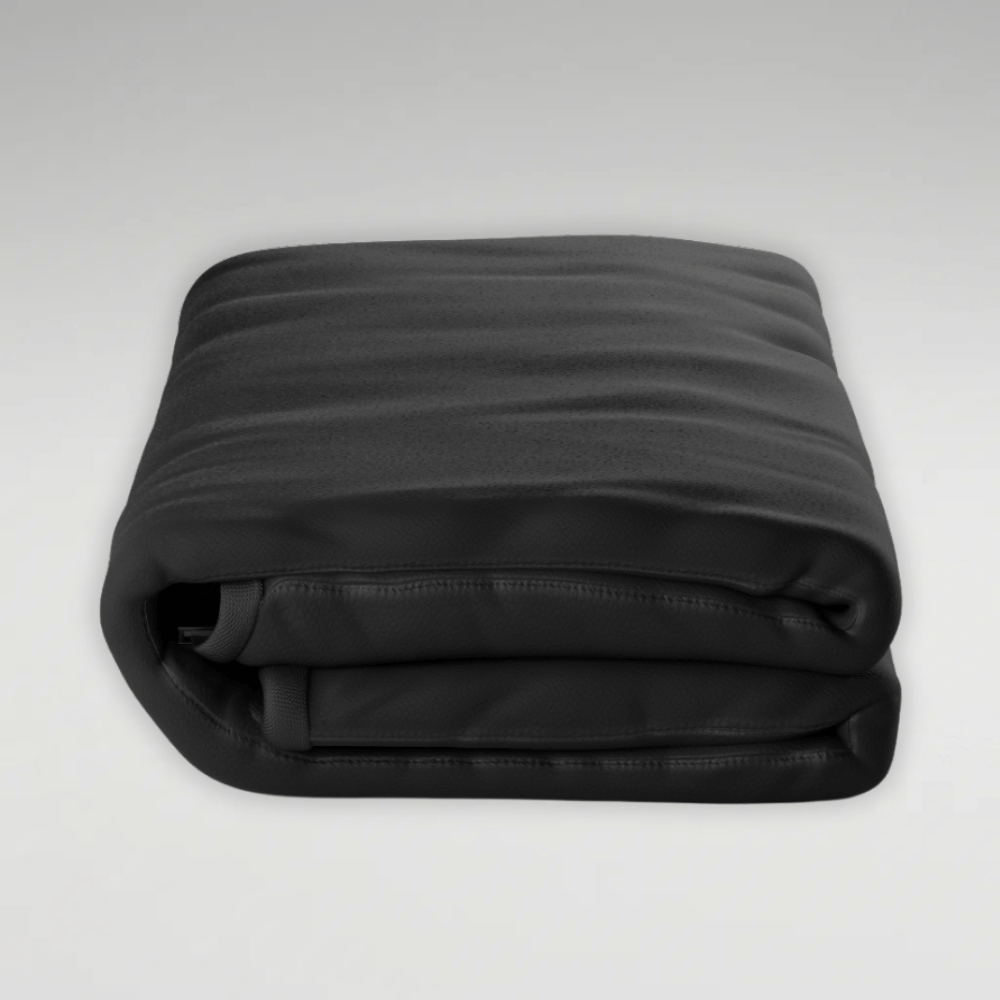
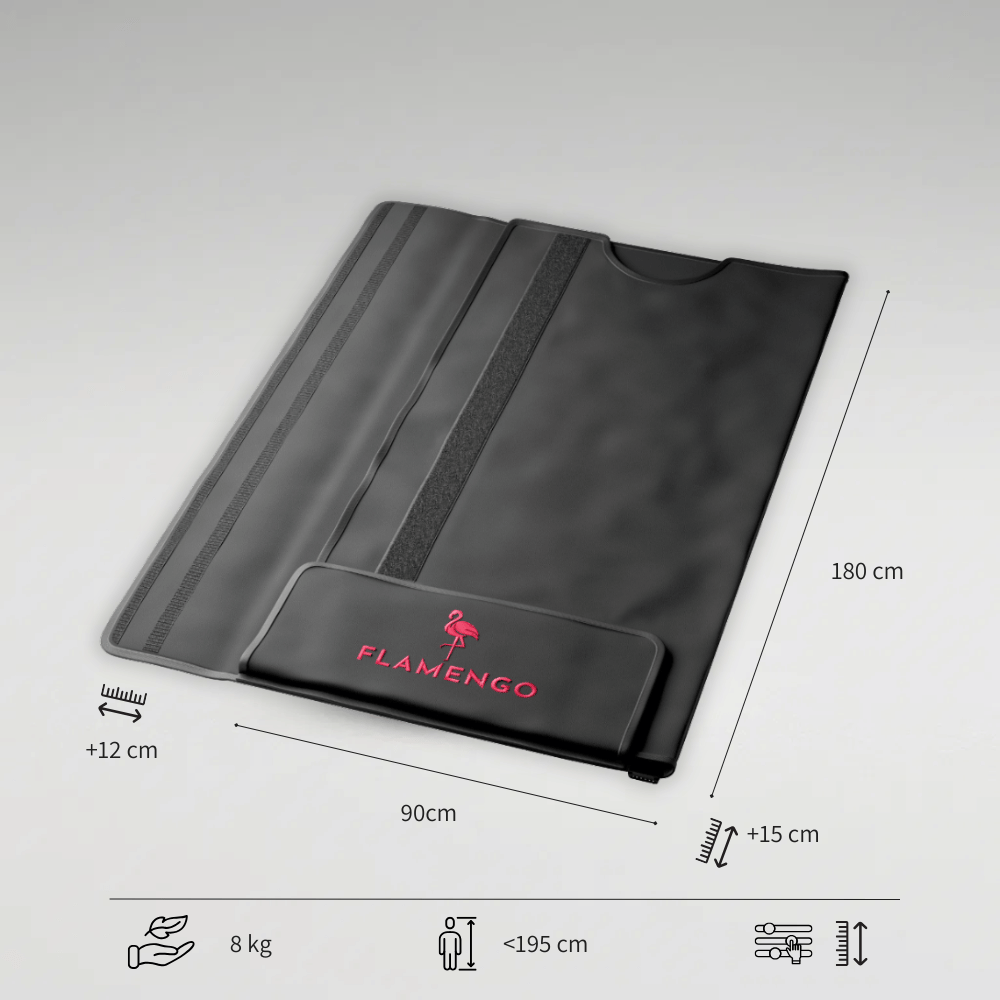
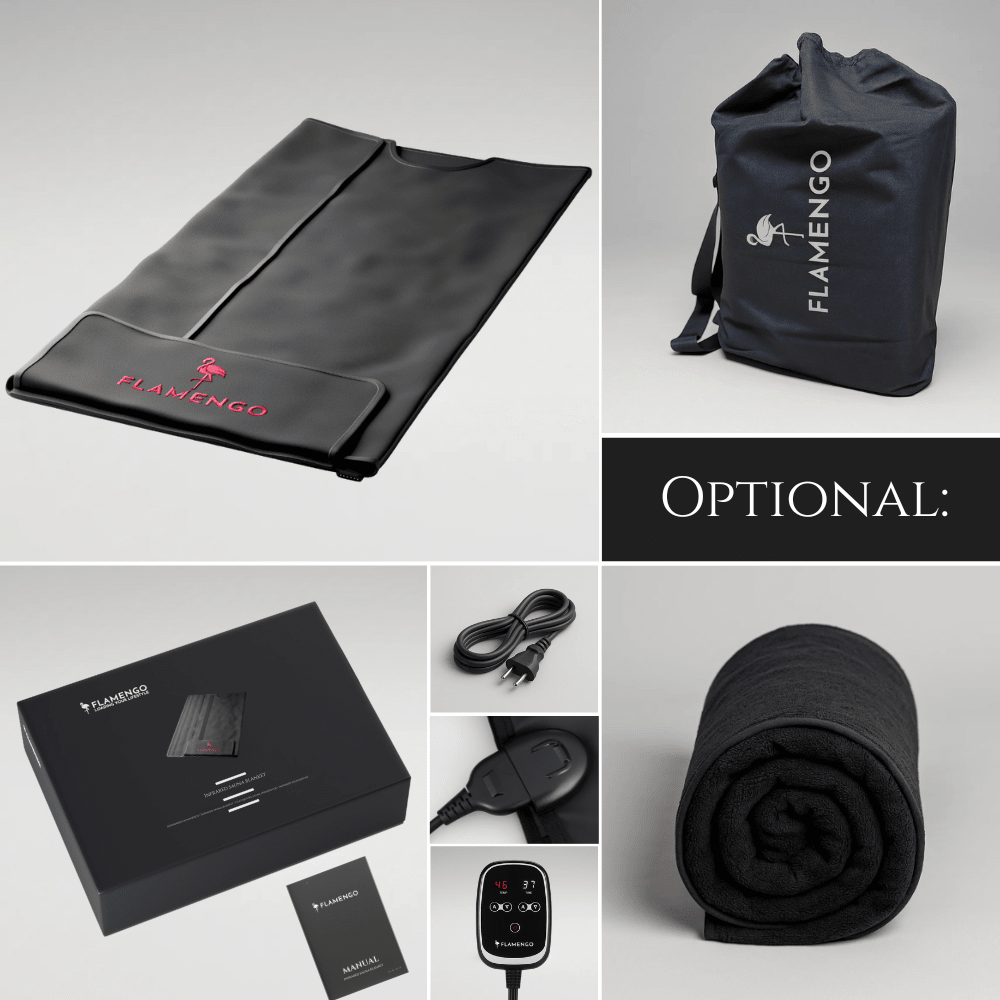
The Flamengo infrared sauna blanket delivers FIR heat at a high-end level — 46.73 mW/cm² radiation intensity, comparable to a professional infrared cabin. Temperature adjustable from 35-75°C, sessions up to 60 minutes. No fixed spot needed, foldable and portable.
The PolarPure ice bath for the cold
The PolarPure ice bath keeps the water at a constant temperature between 3 and 30°C thanks to the built-in chiller. No hauling ice, no melting — simply at your chosen temperature and ready whenever you want. 450L volume, 8.5 cm insulation, IPX4 waterproof.
Why this combination?
Both products are designed for regular home use, with the specs and quality of professional wellness installations. An infrared cabin plus a separate ice bath would easily cost you €5,000-€8,000 with fixed installation — the Flamengo combination achieves the same result for around €2,000 in total, with no fixed spot and the flexibility to use it wherever and whenever you like.
Common mistakes with contrast therapy
Doing contrast therapy wrongly not only gives you fewer benefits, it can also carry risks. Avoid these common mistakes.
| Mistake | What happens | Better |
|---|---|---|
| Finishing on hot | No vascular training, poorer recovery | Always finish on cold |
| Too long in cold water | Hypothermia, shivering, risk | Beginners 30-60 sec, advanced max 2-3 min |
| Straight into ice-cold without warming up | Blood pressure shock, dizziness | Warm up for 20+ min first |
| Doing it intensively every day | The body doesn't get to rest | Max 3-4x a week |
| Exercising straight after a session | Injury risk, overfatigue | At least 2-3 hours' rest |
| Ignoring your body's signals | Risk of overload | Stop if you feel dizzy or have palpitations |
Also read our article on how to cool down properly after an infrared sauna session for the complete recovery approach.
Frequently asked questions
Contrast therapy is a recovery protocol in which you alternate between heat (such as an infrared sauna blanket) and cold (such as an ice bath or cold shower). The temperature switch creates a strong vasodilation-vasoconstriction cycle that trains circulation, reduces inflammation and speeds up recovery.
A complete session takes 60 to 90 minutes. Start with 30-45 minutes of heat (sauna or sauna blanket), followed by 30 seconds to 2 minutes in cold water (10-14°C). Repeat the cycle 2-3 times. Always finish on cold for optimal effect.
For beginners: 1-2 times a week. Gradually build up to 3-4 times a week for regular users. Elite athletes sometimes do it daily during recovery phases, but for most people 3-4x a week is optimal. No more often — the body needs time to adapt.
For optimal effect: yes, a real ice bath at a constant 10-14°C is significantly more effective. If you're starting at home: a cold shower also works, provided it's as cold as possible and lasts at least 30-60 seconds. The difference lies in the constant low temperature and fully immersing the body.
Always start with hot. The body needs to be warmed up first for the cold stimulus to have the greatest effect. Finishing on cold gives the best cardiovascular training and activates the nervous system. Order: hot → cold → repeat if desired → finish on cold.
For healthy adults, contrast therapy is safe provided you do it correctly. Risk groups: people with heart or vascular disease, pregnant women, people with high blood pressure and Raynaud's syndrome should consult a doctor first. Stop immediately if you experience dizziness, palpitations or severe shivering.
For an energy boost and focus: in the morning or after lunch. For recovery after exercise: straight after training. For sleep: 2-3 hours before bed (just before sleeping, cold can be too activating). Avoid contrast therapy straight after heavy meals.
Yes, absolutely. For example, combine it with a session on the InfraStretch massage mat for back and shoulders, or Air Recovery Boots for the legs after exercise. This strengthens the recovery protocol even further.
Conclusion
Contrast therapy is one of the most powerful recovery protocols you can use at home — backed by science, used by elite athletes and biohackers, and now accessible to everyone thanks to the Flamengo combination of sauna blanket and PolarPure ice bath. Start with one cycle a week, gradually build up to 2-3 cycles and always finish on cold. The benefits are measurable: faster muscle recovery, better circulation, a stronger immune system, mental focus and deeper sleep. For anyone serious about recovery and wellness, this combination offers the complete solution — comparable to a professional wellness installation costing €5,000-€8,000, but for a fraction of the price.
Sources: Journal of Athletic Training — Contrast water therapy and exercise induced muscle damage, PubMed — Cold water immersion for recovery. This article is for information only and does not replace medical advice. If in doubt, always consult your doctor.