Lower back pain in women: 6 causes & relief

Causes of lower back pain in women: 6 reasons and how to relieve it
Women suffer from lower back pain significantly more often than men — a difference linked to hormones, pelvic anatomy and how stress manifests in the body. In this article: the six specific causes and what really helps.
- Why do women get lower back pain more often?
- The 6 specific causes
- Persistent lower back pain — when is it chronic?
- Back pain after sleeping — what's going on?
- Back pain from stress — a physical expression
- Pain in the middle of the back — the difference
- 6 ways to relieve the pain
- The Flamengo sauna blanket for lower back pain
- Frequently asked questions
Lower back pain in women is common — research shows that up to 70% of women experience structural lower back problems at some point in their lives, significantly more than men. The reasons are largely specific to women: hormonal fluctuations, pelvic anatomy, pregnancy and childbirth, pelvic floor changes and the way stress often manifests in the lower back and pelvis. In this article: the six main causes of lower back pain in women, how to recognise where your symptoms come from and what helps most to relieve them — with heat therapy as one of the most direct solutions.
Why do women get lower back pain more often?
The figures are clear: women report chronic lower back pain 1.5 to 2 times as often as men. The difference lies in a combination of biological, anatomical and psychosocial factors:
- Hormonal cycle and fluctuations: oestrogen affects connective tissue and pain perception. During menstruation, pregnancy and menopause these levels change drastically — with a direct impact on the lower back;
- Pelvic anatomy: the female pelvis is wider and has a different angle than the male pelvis. This puts extra stress on the sacroiliac joint (SI joint) and the lumbar vertebrae;
- Pregnancy and childbirth: every pregnancy puts strain on the lower back and pelvic floor. Some changes are structural and remain noticeable for years;
- Pelvic floor function: a weakened pelvic floor (due to childbirth, menopause or prolonged sitting) gives the lower back less support;
- Muscle distribution: men have relatively more muscle mass in the lower back region;
- Stress expression: several studies suggest that women more often experience stress physically in the lower back and pelvic area.
The 6 specific causes of lower back pain in women
Which specific causes occur more often in women than in men? Below are the six most common — often several are at play at once:

The six most common causes of lower back pain in women.
1. Hormonal fluctuations
Oestrogen directly affects connective tissue, ligaments and pain perception. During menstruation (especially the first 1-2 days), pregnancy and menopause these levels fluctuate drastically. Many women notice cyclical lower back pain that follows the pattern of the menstrual cycle. During menopause back pain often increases due to falling oestrogen and the associated reduced protection of connective tissue.
2. Pelvic anatomy
The female pelvis is biologically wider than the male pelvis — optimised for childbirth. This creates a larger angle between the hips and lower back (the so-called Q angle). As a result, the SI joint and the lower lumbar vertebrae are subjected to more rotational stress during everyday movements.
3. Pregnancy and the postpartum period
Pregnancy puts considerable strain on the lower back: extra weight at the front, altered posture (lordosis), and the hormone relaxin, which softens ligaments. After childbirth many of these changes remain — especially after several pregnancies. Back pain after childbirth can persist for years if the pelvic floor and core are not specifically rehabilitated.
4. Weakened pelvic floor
The pelvic floor supports the bladder, uterus and partly the lower back. Childbirth, menopause and prolonged sitting weaken the pelvic floor. Result: less support, more compensation by the back muscles — which become overloaded and painful.
5. Stress and muscle tension
Research suggests that women more often experience stress physically in the lower back and pelvic area. Cortisol increases muscle tension, and when this becomes chronic, muscle knots develop in the lower back. It is a vicious circle: stress causes pain, pain causes stress. This also plays a role in wider joint pain.
6. Endometriosis and gynaecological conditions
Endometriosis — a condition in which tissue similar to the uterine lining grows elsewhere — often causes pain radiating to the lower back. Up to 10% of women have endometriosis, and it is often recognised late. Cyclical lower back pain that coincides with menstruation deserves investigation by a gynaecologist.
- Sudden severe pain radiating into the leg (possible herniated disc);
- Pain with fever or feeling generally unwell;
- Pain with bladder or bowel problems — such as incontinence or difficulty urinating;
- Pain after trauma (fall, accident);
- Pain with unexplained weight loss or night pain;
- Pain that does not respond to 6 weeks of self-management;
- Cyclical pain with severe menstrual symptoms — suspect endometriosis.
Persistent lower back pain — when is it chronic?
The medical definition: lower back pain lasting longer than 12 weeks is called chronic. Persistent lower back pain requires a different approach from acute back pain — with chronic pain, several factors are often responsible at the same time.
The three main patterns of chronic lower back pain
- Mechanical chronic: caused by long-term overload, poor posture, a weak core. Pain mainly under load, gone at rest. Responds well to physiotherapy, strength training and heat therapy;
- Inflammation-related: rheumatic-type conditions, especially prolonged morning stiffness. Requires medical treatment;
- Centrally sensitised pain: the nervous system has become oversensitive. Pain that is no longer in proportion to the cause. Requires a multidisciplinary approach — physio, psychology, lifestyle.
Persistent lower back pain calls for a well-considered approach. What does not work: rest alone, painkillers alone, a single form of treatment alone. What does work: a combination of active movement, heat therapy, stress management and, where needed, professional guidance from a physio or pain specialist.
Back pain after sleeping — what's going on?
Many women wake up in the morning with more back pain than they had the night before. Back pain after sleeping is usually related to one or more of these factors:
Sleeping position
- On your back: a pillow under your knees relieves pressure on the lower back;
- On your side: a pillow between your knees keeps the pelvis aligned — reduces SI joint stress;
- On your stomach: the most stressful for the lower back — try to avoid it.
Mattress
A mattress that is too soft or too old (>8-10 years) does not support the lower back sufficiently. A mattress that is too hard can also cause problems. Sweet spot: medium-firm, with good support but enough comfort to let your hip and shoulder sink in.
Lying still for too long
At night the body moves very little. If you are prone to stiffness (osteoarthritis, over 40, menopause), muscles and joints stiffen even more. Effective: 5 minutes of gentle stretching in bed before you get up.
Back pain from stress — a physical expression
Back pain caused by stress is a much underestimated cause — especially in women. Cortisol and sympathetic nervous activity continuously increase muscle tension. With chronic stress this raised baseline tone becomes the "new normal" — muscles never truly relax any more.
How do you recognise stress-related back pain?
- Pain worsens during stress peaks (deadlines, conflicts, worries);
- Pain eases on holiday or in relaxed surroundings;
- Pain goes hand in hand with neck and shoulder tension;
- No clear physical cause found through examination;
- Pain goes hand in hand with sleep problems, irritability, headaches.
What helps with stress-related back pain?
With stress-related back pain, local treatment alone is not enough. The approach calls for:
- Daily stress reduction: meditation, breathing exercises, yoga, time in nature — see our relaxing activities against stress;
- Regular heat therapy — activates the parasympathetic nervous system and lowers cortisol;
- Better sleep — poor sleep makes both stress and pain worse;
- Exercise — endorphins counteract the effects of stress;
- With severe stress: consider therapy or a coach.
Pain in the middle of the back — how it differs from lower back pain
A frequently asked question: "pain in the middle of the back" — is this the same as lower back pain? No, the distinction is medically relevant.
| Location | Medical term | Most common causes |
|---|---|---|
| Upper back (neck-shoulder) | Cervicothoracic | Posture, stress, screen work |
| Middle of the back | Thoracic | Overload, scoliosis, breathing |
| Lower back | Lumbar | Posture, pregnancy, pelvis |
| Tailbone/SI joint | Lumbosacral | Pelvic instability, pregnancy |
Pain in the middle of the back (around the shoulder blades) more often points to posture problems, breathing patterns or stress than to a mechanical back condition. Both respond well to targeted heat therapy and posture awareness.
6 ways to relieve lower back pain
What helps in the long term? The six most effective ways — stronger combined than separately:

Six approaches to lower back pain — combined they work better than individual measures.
For non-acute lower back pain (no acute swelling, no radiating pain), heat is one of the fastest-acting solutions. Deep infrared heat warms the skin, after which the warmth reaches the tense lower back muscles more deeply via the circulation and relaxes them. Also read how heat for back pain works. Effect noticeable within 20-30 minutes, lasting for hours afterwards. More on this in the dedicated section below.
Specifically for women: a strong pelvic floor supports the lower back. With guidance from a pelvic floor physiotherapist you learn effective exercises. Especially useful after childbirth, during menopause or with long periods of desk work. Results are often clearly noticeable after 6-8 weeks of consistent practice.
Research is consistent: for non-acute lower back pain, movement helps more than rest. Walking, cycling, swimming, yoga or Pilates. 30 minutes a day, 5x a week. Avoid heavy lifting and sports with lots of rotation. Office work: get up every hour and move around briefly.
On your back? Pillow under your knees. On your side? Pillow between your knees — keeps the pelvis aligned. Avoid sleeping on your stomach. Mattress: medium-firm, replace every 8-10 years. A pillow under the lower back supports the natural lordosis.
Much chronic lower back pain has an inflammatory component. Nutrition makes a difference: omega-3, turmeric, green vegetables, olive oil. Avoid refined sugar. Magnesium is crucial for muscle relaxation (200-400 mg/day if a deficiency has been confirmed), as is vitamin D in case of deficiency.
Because women often experience stress in the lower back, daily stress reduction is fundamental. Yoga, meditation, breathing exercises, enough sleep. Yoga is doubly effective — relaxation plus muscle balance. Just 20 minutes a day already makes a noticeable difference.
The Flamengo sauna blanket for lower back pain — proven support
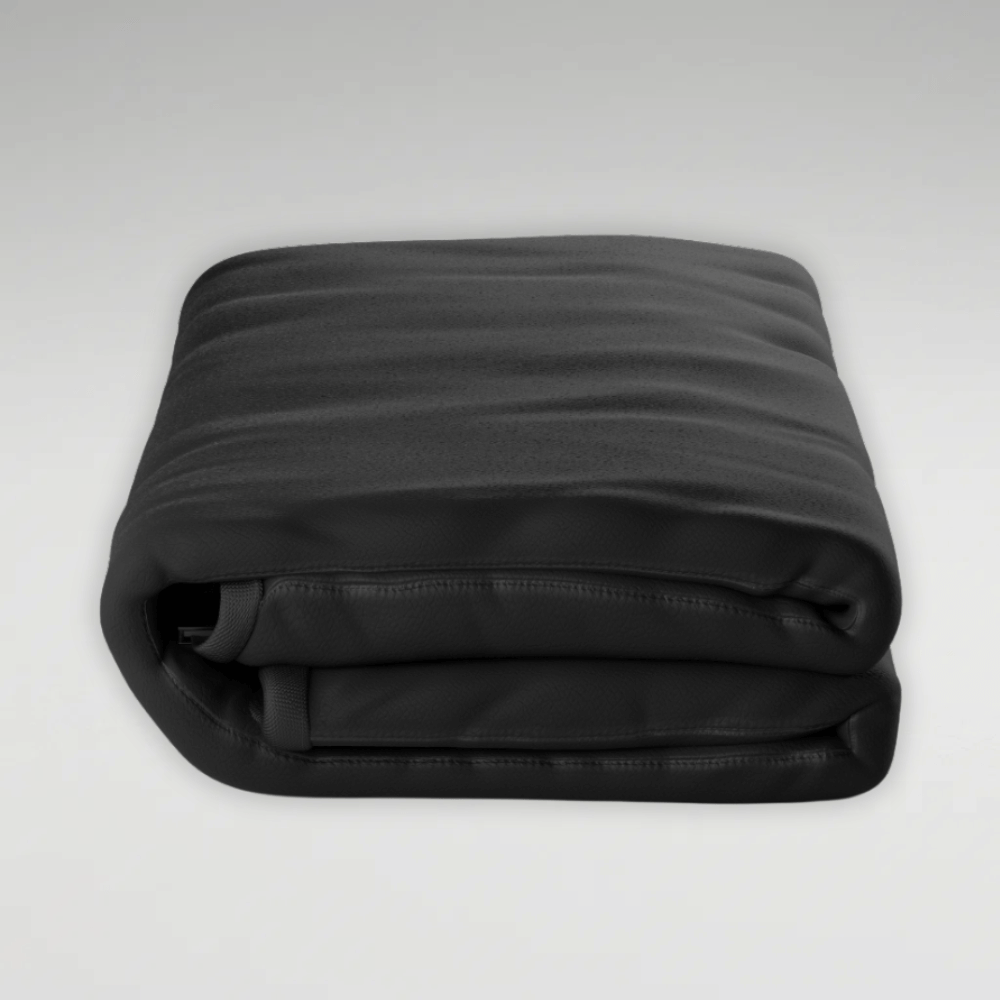
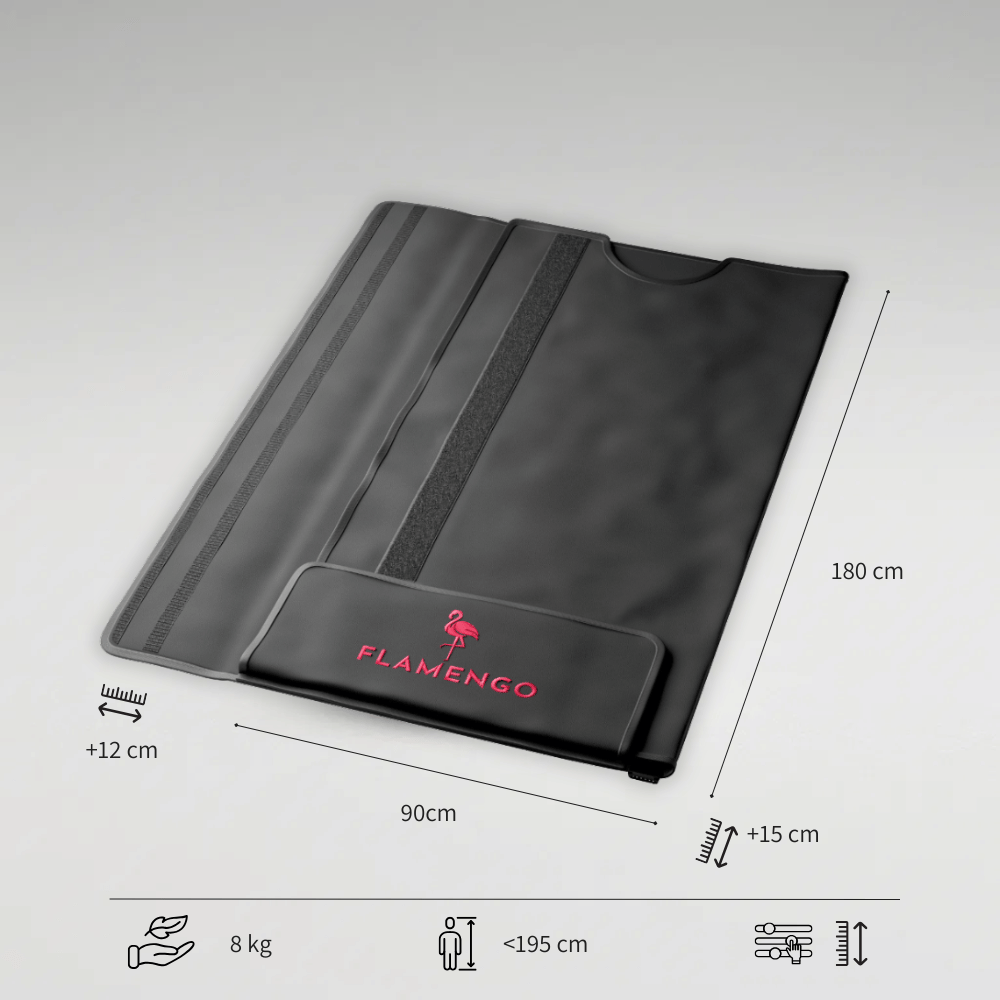
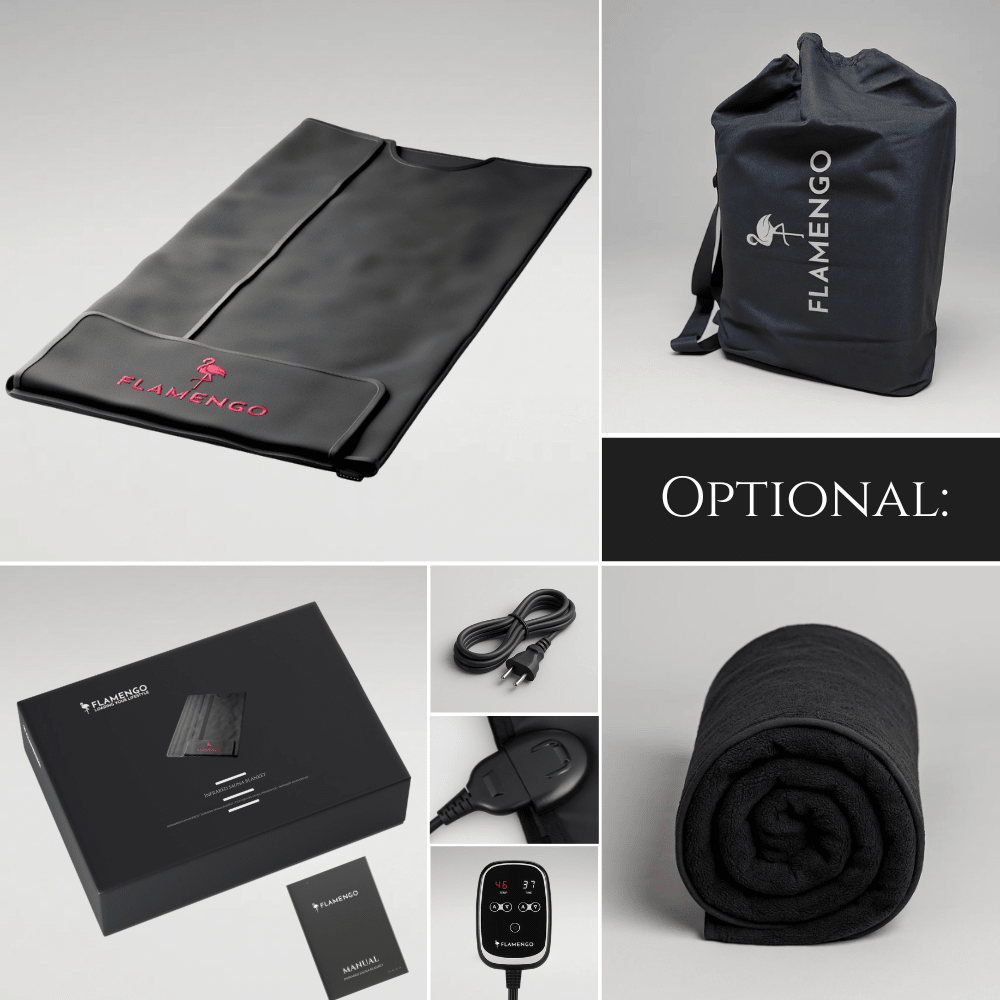
Of all the approaches we at Flamengo see working for women with lower back pain — and we have helped thousands of customers with it — regular use of the Flamengo infrared sauna blanket is one of the most consistently positive. The combination of deep heat, improved circulation and stress reduction tackles several causes at once.

Three mechanisms by which the sauna blanket relieves lower back pain.
Why does the Flamengo sauna blanket work so well for lower back pain?
The infrared sauna blanket emits mainly far infrared (FIR), with a small measured share of mid infrared (MIR) that may contribute to a fuller heat experience. The radiation warms the skin; that warmth is spread deeper into the tissue through conduction and greatly improved circulation — right into the muscles of the lower back. You can read more about the measured wavelength spectrum here:
- Tense lower back muscles relax: with lower back pain, surrounding muscles tense up for protection. This "guarding tension" often becomes chronic and keeps the pain going. Deep heat breaks this cycle;
- Improved circulation in the pelvic area: blood vessels dilate, waste products are removed faster and nutrients supplied faster. In chronic lower back pain, reduced circulation is often an underlying factor;
- Lower cortisol: for women for whom stress is a major factor, this is crucial. A 30-45 minute session activates the parasympathetic nervous system — natural stress reduction without side effects;
- Deeper sleep: back pain disrupts sleep, poor sleep worsens back pain. An evening session 1.5-2 hours before bedtime helps you fall asleep faster and gives better-quality sleep;
- Cumulative effect with regular use: most customers notice a clear improvement after 2-4 weeks of regular use (3-4x a week) — not only during and shortly after the session, but structurally less pain.
How do you use the sauna blanket for lower back pain?
- Frequency: 3 to 4 sessions a week is optimal. During an acute flare-up, daily use for a short period is fine;
- Temperature: 50-60°C in the first weeks, build up to 55-65°C;
- Session length: 30 to 45 minutes;
- Best time: in the evening — the double benefit of relief plus better sleep;
- After the session: 5 minutes of gentle back exercises — your muscles are optimally supple then;
- During menstruation: be careful during the first days — in some women heat temporarily increases bleeding.
- During pregnancy, consult your midwife first;
- If a herniated disc with radiating leg pain is suspected — get a medical assessment first;
- During menstruation, be careful on the first 1-2 days — heat can increase bleeding;
- Do not use with fever or acute infections;
- If in doubt: consult your GP or physiotherapist.
Frequently asked questions about lower back pain in women
A combination: hormonal fluctuations (especially menopause and menstruation), pelvic anatomy, after-effects of pregnancy, a weakened pelvic floor and stress expressed in the lower back. Several causes are often at play at once. For a structural approach: identify which factors play a role in your situation.
Back pain after sleeping has several possible causes: a poor sleeping position, a mattress that is too old or unsuitable, stiffness from limited movement at night, or a combination. What helps: a pillow between or under your knees, replacing your mattress with a medium-firm one, and heat therapy the evening before.
Yes, especially in women. Stress raises cortisol and muscle tension - often felt chronically in the lower back and pelvis. With prolonged stress this raised tension becomes the new baseline. Stress management (meditation, yoga, heat therapy) is therefore essential for chronic back pain where no clear physical cause is found.
Lower back pain (lumbar) sits below the waist and often has mechanical or pelvis-related causes. Mid-back pain (thoracic) sits at the level of the shoulder blades and is more often linked to posture, breathing patterns and stress. The approach partly overlaps - heat works for both - but the analysis of the cause differs.
For chronic lower back pain (no acute swelling): heat works best - it relaxes tense muscles and improves circulation. For acute pain after an injury with swelling: cold in the first 48 hours. If in doubt: chronic = warm, acute with swelling = cold.
With acute severe pain radiating into the leg (suspected herniated disc), fever, bladder or bowel problems, pain after trauma, unexplained weight loss or night pain that does not go away. Also with pain that has not responded to 6 weeks of self-management, or cyclical pain with menstrual symptoms (possible endometriosis).
Yes, often very effectively. A session the evening before (1.5-2 hours before bedtime) relaxes the lower back muscles, improves circulation and promotes deeper sleep. Many customers notice less morning stiffness and less pain after getting up as a result. For a lasting effect: 3-4 sessions a week for at least 4 weeks.
Yes, yoga is one of the proven effective approaches for chronic lower back pain - especially in women. It combines muscle strengthening, flexibility, breathing and stress reduction. Start with a dedicated yoga-for-back-pain class or online programme. 20-30 minutes a day, 4-5x a week for a noticeable effect within 6-8 weeks.
Conclusion
Lower back pain in women often has specific causes: hormonal fluctuations, pelvic anatomy, after-effects of pregnancy, pelvic floor changes, stress and gynaecological conditions. First understand what is going on in your situation — then you can take targeted action. The six ways to relieve it — heat therapy, pelvic floor training, exercise, sleeping position, nutrition and stress management — work better combined than separately. Of all the approaches, regular heat therapy with a Flamengo infrared sauna blanket works fastest and most consistently for many women — the deep heat relaxes tense lower back muscles, improves circulation and helps lower cortisol. The effect is usually noticeable within 2-4 weeks of regular use. If back pain does not respond to 6 weeks of self-management, or if there are warning signs (radiating leg pain, fever, bladder problems): always contact your GP to rule out underlying causes.
Relax tense lower back muscles and sleep better with an evening heat session.
View the infrared sauna blanket →This article is for information only and does not replace medical advice. If symptoms persist or worsen, always contact your GP. Flamengo supplies wellness products for self-managing symptoms — not medical devices.